How to Calculate CPM
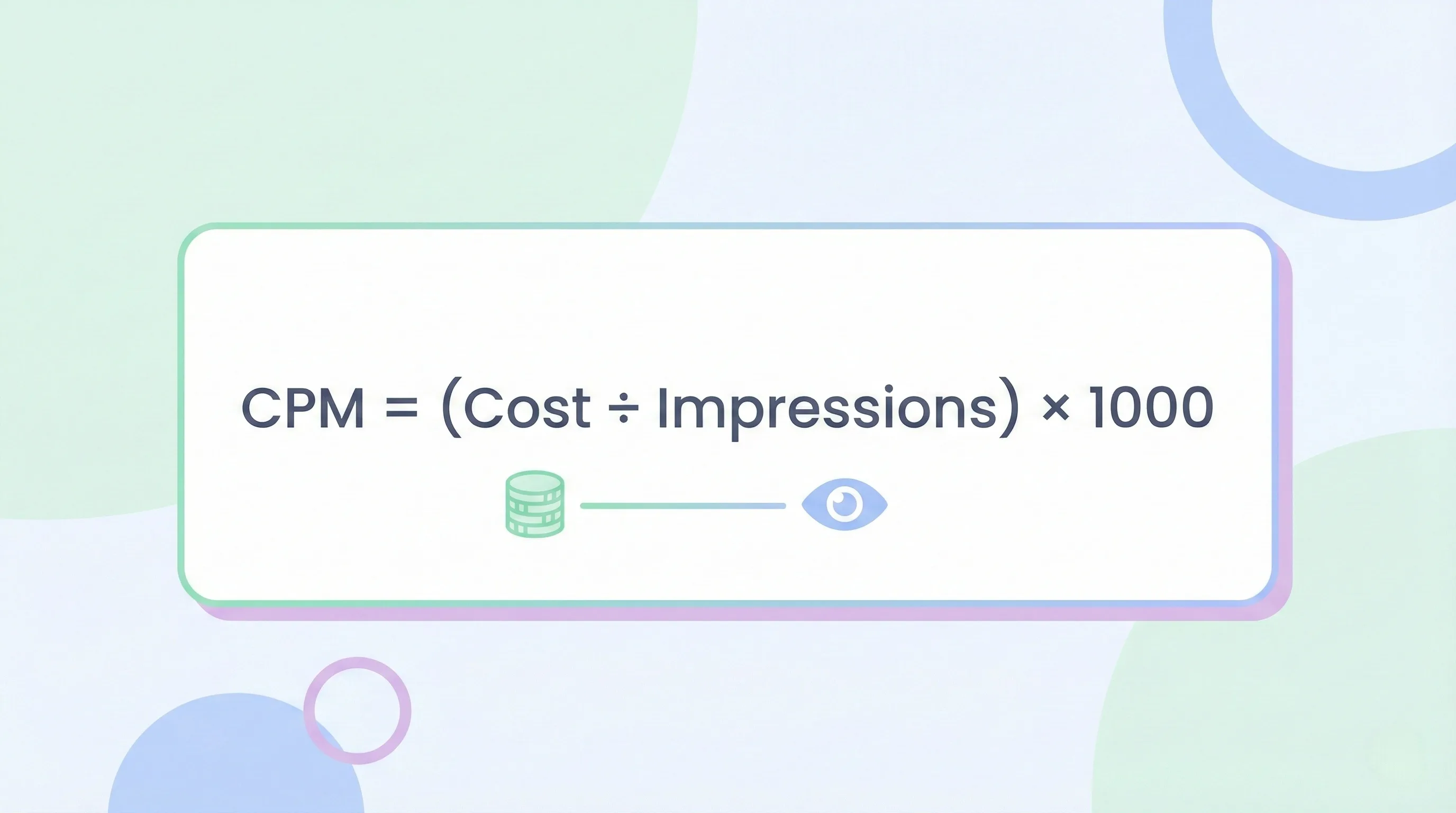
how to calculate cpm: CPM = (cost ÷ impressions) × 1000. Simple example inside.
how to calculate cpm is just a simple question:
“How much did I pay for every 1,000 times my ad was shown?”
Think of it like candy.
- You pay some money (cost)
- People see your ad (impressions)
- CPM tells you the price for 1,000 impressions
What does CPM mean?
CPM means cost per thousand impressions (“mille” = thousand).
It’s a popular way to compare awareness costs across campaigns and placements.
Helpful references:
- Google Ads Help (CPM / viewable CPM): https://support.google.com/google-ads/answer/6310
- Wikipedia (Cost per mille): https://en.wikipedia.org/wiki/Cost_per_mille
- Investopedia (CPM): https://www.investopedia.com/terms/c/cpm.asp
The CPM formula
Here’s the whole formula:
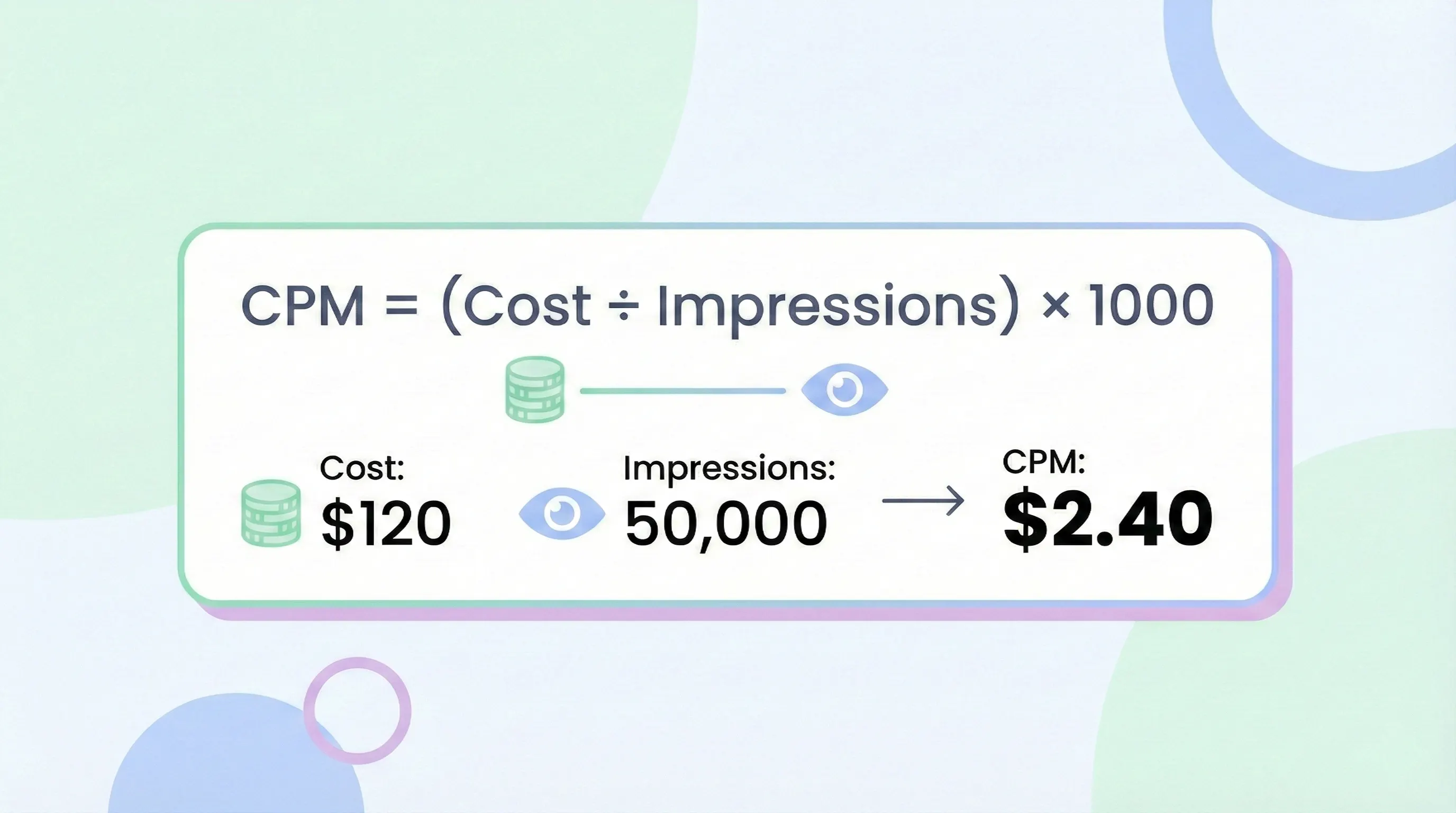
CPM = (Cost ÷ Impressions) × 1000
Tiny example
Let’s say:
- Cost = $120
- Impressions = 50,000
CPM = (120 ÷ 50,000) × 1000
CPM = 0.0024 × 1000
CPM = $2.40
So you paid $2.40 per 1,000 impressions.
How do you calculate CPM in 3 steps?
- Find your cost (how much you spent)
- Find your impressions (how many times the ad was shown)
- Do: (cost ÷ impressions) × 1000
That’s it. That’s the full “how is cpm calculated” answer.
Quick sanity check (so you know it’s not wrong)
- If impressions go up but cost stays the same, CPM should go down
- If cost goes up but impressions stay the same, CPM should go up
If your CPM looks weird, you may be using:
- clicks instead of impressions, or
- forgetting the “× 1000”.
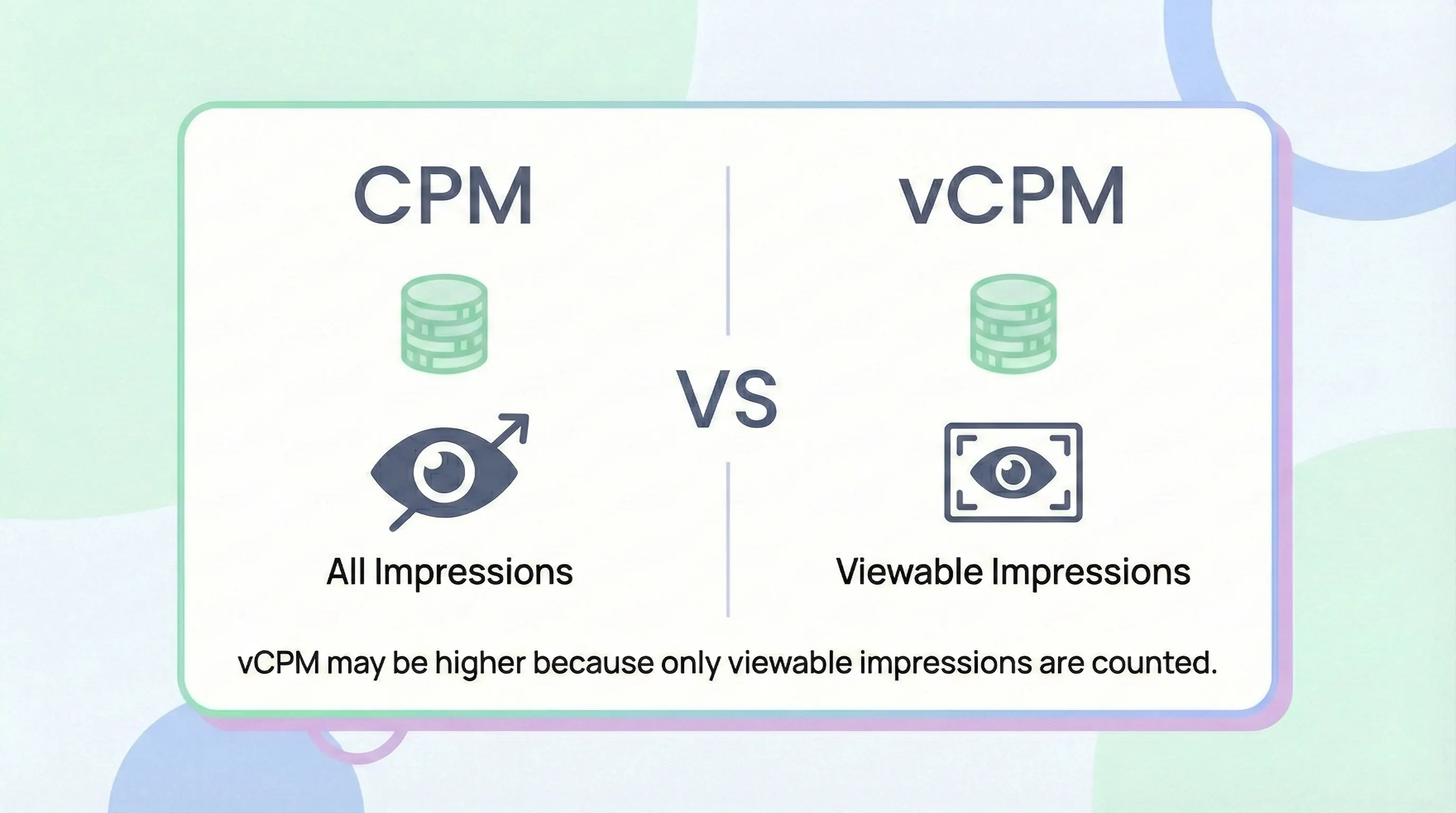
Why does my platform show vCPM?
Sometimes platforms count only viewable impressions (the ad had a real chance to be seen).
Google Ads often calls this vCPM (viewable CPM).
So your CPM math can change if the “impressions” number is “viewable impressions.”
What CPM is good for (and what it is not)
CPM is good for:
- Comparing awareness cost across different campaigns/placements
CPM is not enough alone:
- CPM does not tell you clicks or sales
To judge performance, look at CTR/CPC/CPA too.